
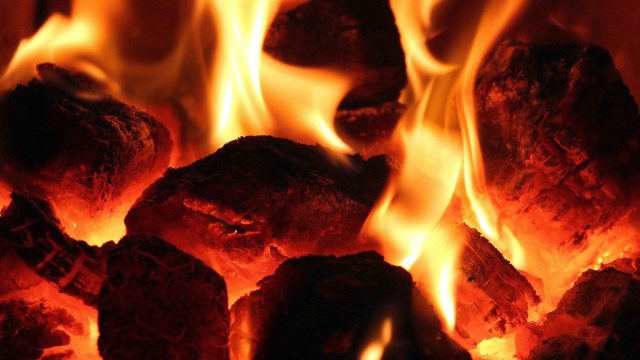
There is something particularly satisfying about a well-established coal fire, but getting one started can sometimes require a little more patience than lighting a wood fire. Coal needs sustained heat and a good supply of oxygen before it will ignite properly, which is why simply holding a match to a piece of coal is unlikely to achieve very much.
The traditional approach to starting a coal fire involves building it up gradually using paper, kindling and a small quantity of coal before adding more fuel. Alternatively, an electric firelighter such as the Grenadier Electric Firelighter can remove many of these steps and apply concentrated heat and airflow directly to the fuel, making the while process quicker and easier.
In this guide, we explain how to start a coal fire using both methods, along with some of the important preparation, airflow and safety considerations that can make lighting your fire considerably easier.
Understanding Coal as a Fuel Before You Begin
Before lighting a coal fire, it helps to understand why coal behaves differently from other common solid fuels.
Wood and kindling can ignite relatively easily because a flame quickly heats the material sufficiently for combustion to begin. Coal generally requires a higher and more sustained temperature before it will ignite. This is one of the main reasons why a traditional coal fire normally begins with paper and kindling rather than attempting to light the coal directly.
Different types of coal also behave differently.
Traditional house coal, or bituminous coal, historically became popular for domestic open fires because it can ignite comparatively easily and produces a strong flame. However, the sale of traditional house coal for domestic burning is now prohibited in England, apart from limited exemptions. Anthracite, semi-anthracite and various approved smokeless fuels continue to be available.
Anthracite has a particularly high carbon content and tends to burn with a smaller flame, producing sustained heat once established. However, its ignition characteristics mean that it can be more difficult to get started than softer forms of coal.
Manufactured smokeless fuels are another common option for domestic solid-fuel appliances. If you live in a smoke control area, it is particularly important to check which fuels you are permitted to burn and whether your stove or appliance is approved for the fuel concerned. Many areas of the UK are subject to smoke control restrictions.
Whatever fuel you use, always check that it is suitable for your particular fireplace, stove or appliance and follow the manufacturer’s instructions.
Choosing and Preparing the Right Equipment
A successful coal fire starts with the right equipment and a properly prepared fireplace or stove.
Coal is normally burnt on a fire grate rather than directly on the base of the fireplace. The gaps in the grate allow air to enter underneath the fuel, providing the oxygen needed for combustion. The grate should therefore be correctly positioned and should not be completely blocked with accumulated ash.
Beneath the grate, the ash pan collects material falling from the fire. Although some ash is inevitable, excessive build-up beneath the grate can restrict airflow and make a coal fire considerably harder to start.
It is also useful to have suitable fireplace tools available, including:
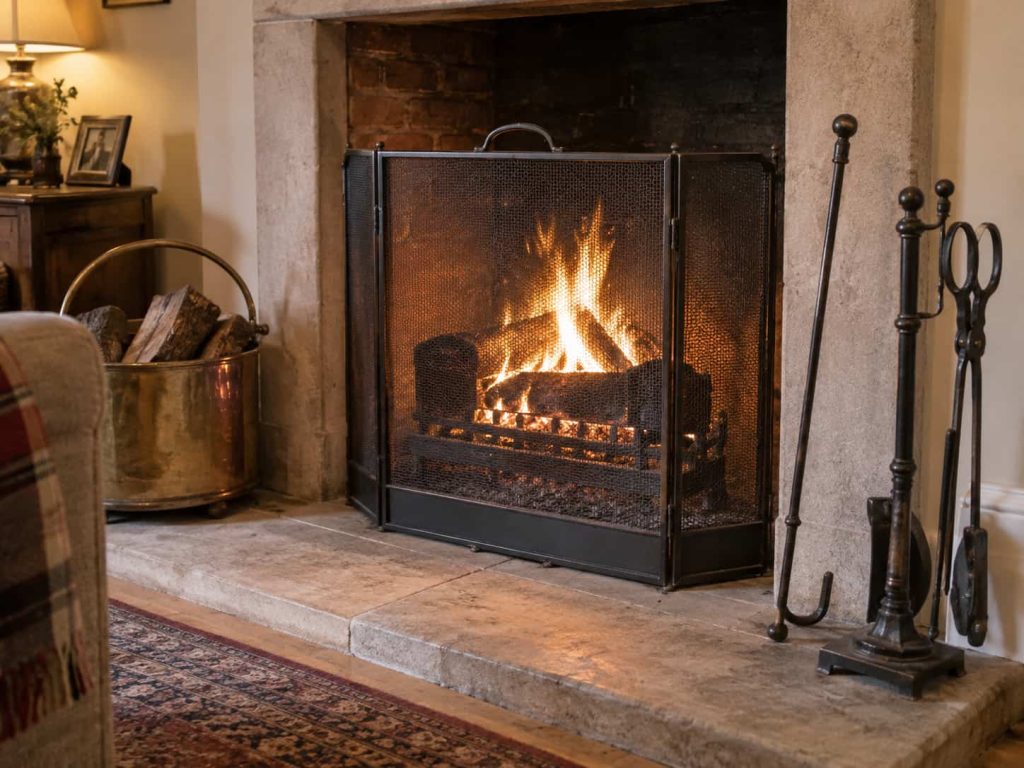
- A poker for carefully adjusting the fuel.
- Fire tongs for moving individual pieces where necessary.
- A suitable shovel and brush for managing cold ash.
- A fireguard for an open fire.
Before lighting the fire, clear away excessive ash and check that the grate is in good condition.
The chimney or flue is equally important. A clear chimney creates the draft needed to draw combustion gases upwards while pulling fresh air towards the fire. If you suspect that the chimney is blocked, damaged or not drawing correctly, do not light the fire until it has been professionally checked.
Fireplace and Stove Considerations
The exact lighting process will differ slightly depending on whether you are using an open fireplace or an enclosed stove.
With an open coal fire, much of the airflow is determined by the chimney draft and the design of the grate. Keeping the underside of the grate reasonably clear is therefore particularly important.
A solid-fuel or multi-fuel stove normally provides much greater control over airflow. Depending on its design, it may have primary and secondary air controls that can be adjusted during lighting and once the fire is established.
Coal and many smokeless fuels generally benefit from air entering underneath the fuel bed during ignition, although you should always follow the instructions provided by the stove manufacturer.
Before starting, inspect the firebox, remove excessive ash and make sure that nothing combustible has been left too close to the fireplace or stove.
The Role of Airflow, Draft and Ventilation
Heat alone is not enough to keep a coal fire burning. The fire also needs oxygen.
When a chimney is drawing correctly, hot gases rise through the flue and create a pressure difference that helps pull fresh air towards the fire. This continuous movement of air supports combustion.
Restricted airflow is consequently one of the most common reasons for a difficult or unsuccessful coal fire.
For an open fire, check that ash has not completely blocked the spaces beneath the grate.
If you are using a stove, the relevant air controls will normally need to be opened during the initial lighting stage. Once the fuel is burning strongly and the stove has reached an appropriate operating temperature, they can usually be adjusted to control the rate of combustion.
The room itself must also have adequate ventilation. Never deliberately block ventilation openings provided for a solid-fuel appliance.
Poor airflow can result in a fire that struggles to establish itself, produces excessive smoke or repeatedly goes out. If smoke is entering the room or you suspect a problem with the chimney draft, extinguish the fire safely and investigate the cause rather than repeatedly attempting to relight it.
Traditional Method: Building a Coal Fire Step by Step
The traditional way to start a coal fire involves creating a smaller, easily ignited fire capable of producing enough sustained heat to ignite the coal above it.
Begin with a clean grate and adequate airflow.
Place several pieces of loosely scrunched newspaper or suitable paper towards the bottom of the grate. Avoid packing the paper too tightly, as air needs to circulate around it.
Next, arrange a layer of dry kindling above the paper. Rather than creating a dense pile, position the pieces so there are small gaps between them. This allows air to move through the fire as the kindling begins burning.
Place a light layer of coal or suitable solid fuel over the kindling. Do not fill the entire grate at this point. Too much coal can prevent the heat underneath from developing and smother the fire before it becomes established.
Light the paper in several places using a long match or suitable firelighter.
As the paper burns, it should ignite the kindling. Allow the kindling to become well established rather than immediately adding more coal. The objective is to create enough sustained heat to bring the initial pieces of coal up to their ignition temperature.
Once those pieces are beginning to glow and burn consistently, add more coal gradually.
Avoid tipping a large quantity of cold fuel onto the fire in one go. Add moderate amounts and allow each layer to establish before adding more.
A poker can be used carefully where necessary to reposition pieces of coal or open small channels through the fuel bed to improve airflow. Avoid excessive poking, however, as continually disturbing a developing fire can have the opposite effect.
Above all, be patient. Coal takes longer to ignite than kindling. Giving the initial fire enough time to develop is usually more effective than continually adding paper, firelighters or more fuel.
Why Traditional Methods Can Be Slow and Unreliable
Although people have successfully lit coal fires using paper and kindling for generations, the process has several disadvantages.
First, you need a supply of properly dry kindling. Damp wood can absorb much of the available heat rather than helping the coal reach its ignition temperature.
Damp fuel can create similar problems.
Using additional paper is not necessarily the solution. Too much paper can generate a brief burst of flame without producing the sustained heat required to ignite the coal. It can also create loose ash and fragments of burnt paper.
Chemical firelighters can make the process easier, but they need to be bought and stored and some people dislike their characteristic smell.
There are also simply quite a few stages involved: preparing the grate, arranging paper, finding kindling, building the fire, lighting it and gradually adding the coal.
For an occasional fire this may all be part of the experience. For someone lighting a coal or multifuel fire regularly, however, it can become a chore.
That is where an electric firelighter offers a very different approach.
Easiest way to light a coal fire. Use the Grenadier Electric Firelighter
The Grenadier Electric Firelighter is designed to remove the need to construct a conventional fire from paper, matches, chemical firelighters and kindling.
Instead, the Grenadier generates powerful concentrated heat and uses its built-in fan to direct super-heated air towards the fuel.
This provides the two things required to establish the fire: heat and airflow.
The Grenadier Electric Firelighter can be used to light solid fuels including coal, wood and smokeless fuel within minutes, with a coal fire typically taking around two minutes to light. Actual ignition time will vary according to factors such as the type and condition of the fuel.
Because the Grenadier applies heat directly to the fuel, there is no need to create the usual layers of newspaper and kindling underneath it.
This can be particularly useful with harder-to-light fuels such as anthracite and certain manufactured smokeless fuels.
The Grenadier can be used with open fires and suitable solid-fuel stoves, as well as for other applications including wood fires, barbecues, firepits and pizza ovens.
How to Use the Grenadier Electric Firelighter to Start a Coal Fire
Using a Grenadier simplifies the process considerably.
First, prepare the fireplace in the normal way. Riddle or clear the grate so there is sufficient airflow beneath the fuel and remove excessive ash.
You can then place your coal or suitable smokeless fuel directly onto the grate. There is no requirement to build a base from newspaper and kindling.
Smaller pieces of fuel around the initial ignition area can help the fire become established.
Position the Grenadier alongside the fire and adjust its stand so that the nozzle is directed towards the bottom of the fuel. Grenadier’s own operating guidance recommends positioning the nozzle so that it initially just touches the fuel.
Plug the Grenadier into an appropriate mains supply. The fan directs air towards the fuel, while the heating element provides concentrated heat.
After a few minutes, the fuel around the nozzle should begin to glow and ignite.
Once a reasonable area is alight, withdraw the Grenadier slightly so the nozzle is clear of the fuel. The heating element can then be switched off while the fan continues blowing air into the fire.
At this stage, the airflow effectively works like a set of bellows, encouraging the fire to spread through the surrounding fuel while also helping the Grenadier’s heating element and nozzle to cool.
Once the coal fire is properly established, switch off and unplug the Grenadier in accordance with its operating instructions before allowing it to cool and storing it safely.
Additional coal can then be added gradually as required.
Advantages of the Grenadier Over Traditional Coal Fire Lighting Methods
The biggest difference between the Grenadier and traditional fire-lighting methods is the amount of preparation involved.
Instead of gathering paper and dry kindling, carefully constructing a fire and hoping that enough heat reaches the coal, you can place the fuel on the grate and apply concentrated heat directly where it is needed.
This offers several advantages:
- Faster lighting: A coal fire will typically light in around two minutes, although fuel type and condition will affect the actual time.
- No kindling required: There is no need to continually purchase, chop or store kindling wood.
- No matches or paper: The usual process of scrunching paper and reaching into the fireplace to light it is eliminated.
- No chemical firelighters: This means no chemical firelighter residue or characteristic chemical odours.
- Useful for difficult fuels: The concentrated heat can make fuels such as anthracite and smokeless fuel considerably easier to ignite.
- Consistent technique: Rather than relying on how well a traditional fire has been constructed, the heat and airflow are applied directly to the fuel.
- Designed for repeated use: Unlike matches, kindling and disposable chemical firelighters, the Grenadier is a reusable appliance.
Designed and manufactured in the UK, the Grenadier has an all-metal construction. Many of our firelighters remain in daily use after more than 50 years, while replacement parts are available should repairs eventually be required.
For households that light a solid-fuel fire regularly, these factors can make an electric firelighter an attractive alternative to keeping a continual supply of traditional fire-lighting materials.
Coal Fire Lighting Tips for Best Results
Whichever method you use, a few simple steps can make starting and maintaining your coal fire considerably easier.
Keep the fuel dry. Damp coal and solid fuel will require additional energy to drive away moisture before the fuel can properly ignite.
Maintain airflow beneath the grate. Excess ash in the ash pan can block the supply of oxygen entering underneath the fuel. Clear it regularly, while remembering that ash can remain dangerously hot long after a fire appears to have gone out.
Do not overload the fire initially. Whether you are using a traditional method or an electric firelighter, start with a manageable quantity of fuel. Once that is burning strongly, additional coal can be added.
Keep air controls open while establishing the fire. For a suitable stove, follow the manufacturer’s instructions regarding the correct vent positions during lighting. Airflow can normally be reduced once the fire is fully established.
Avoid smothering the fire. Adding too much fresh coal at once can suddenly reduce the temperature and airflow through the burning fuel.
Adjust the coal carefully. If necessary, use a poker to create space for air to travel through the fuel bed, but avoid continually disturbing a fire that is already developing successfully.
Most importantly, give the fire time to establish before attempting to control its heat output.
Safety Precautions When Starting a Coal Fire
Solid-fuel fires can provide dependable heat, but they need to be operated and maintained correctly.
Have your chimney swept regularly at a frequency appropriate for your appliance and usage. A blocked or poorly maintained flue can interfere with draft and increase the risk of smoke and combustion gases entering the room.
Never attempt to start or accelerate a coal fire using petrol, methylated spirits or other flammable liquids. The resulting flash fire can cause extremely serious injuries.
Keep furnishings, rugs and other combustible materials a safe distance from the fireplace or stove. For an open fireplace, use an appropriate fireguard to help prevent hot fragments or sparks escaping into the room.
Suitable ventilation is essential whenever a solid-fuel appliance is operating. Never block permanent air vents installed to supply combustion air.
A working carbon monoxide alarm should also be installed in accordance with the relevant instructions and regulations. Carbon monoxide cannot be seen, smelled or tasted, making an alarm an important additional safety measure.
When clearing the fireplace, remember that coal and ash can remain hot for a surprisingly long time. Allow ash to cool completely and use an appropriate non-combustible container before disposal.
Finally, supervise a newly lit fire until you are satisfied that it is burning correctly. If smoke is unexpectedly entering the room, the chimney does not appear to be drawing correctly, or you have any concerns about the condition of your fireplace, stove or flue, stop using it and seek professional advice.
A Simpler Way to Start Your Coal Fire
Lighting a coal fire traditionally is perfectly achievable, but there is no escaping the preparation involved. Paper has to be arranged, kindling needs to be dry, the initial coal must be added carefully and the whole process needs time to develop.
For people who enjoy that ritual, the traditional method may remain part of the appeal of having an open fire.
For anyone who would rather simply get the fire burning, however, the Grenadier Electric Firelighter offers a much more straightforward alternative.
By applying concentrated heat and forced airflow directly to the fuel, it eliminates the need for matches, paper, kindling and chemical firelighters and can have a coal or solid-fuel fire established within minutes.
That means less time preparing the fire and more time enjoying it.


